Root Canal Therapy (Endodontics)
Services:
Root Canal Consultation & Diagnosis
Root Canal Treatment (Endodontic Therapy)
Treatment of Infected or Abscessed Teeth
Retreatment of Previous Root Canals
Cracked Tooth Evaluation
Emergency Endodontic Care
Post & Core Restoration (when indicated)
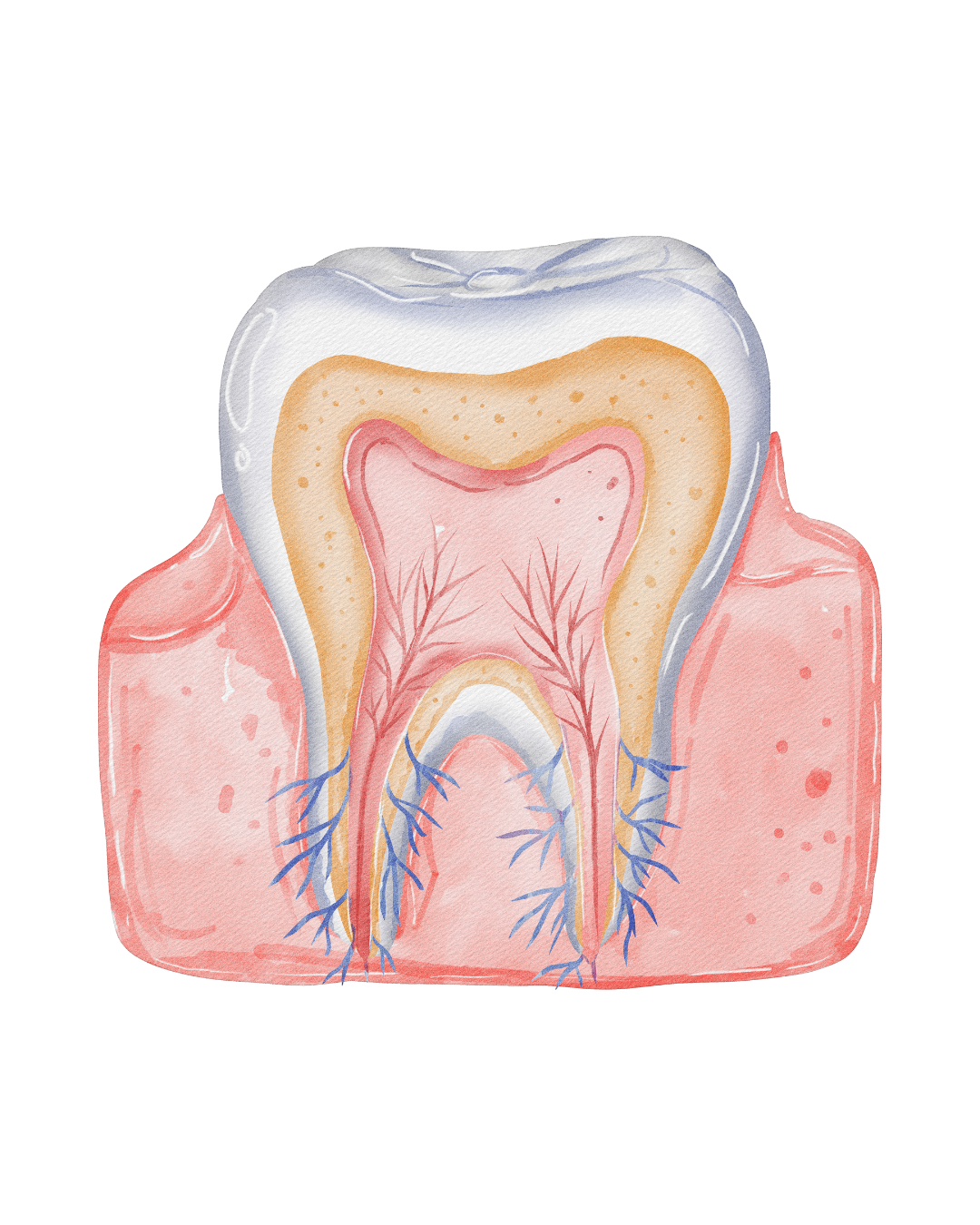
Root canal therapy is used to treat infection or damage inside a tooth while preserving its natural structure whenever possible. By removing the infected tissue, cleaning the root canals, and sealing the tooth, treatment can help relieve pain, eliminate infection, and restore the tooth's function.
Tooth Pain Is a Symptom, Not a Diagnosis
Tooth pain can have several possible causes, including tooth decay, a cracked or damaged tooth, an exposed root, gum inflammation, bite-related pressure or inflammation inside the tooth. The location and pattern of discomfort can provide useful information, but an examination and appropriate testing are required to determine the cause.
Some teeth requiring root-canal treatment cause significant pain, while others have mild, changing or limited symptoms. A reduction in pain does not necessarily confirm that the underlying problem has resolved.
At Fort Dental Clinic, every case begins with a thorough examination and digital imaging to determine the most appropriate treatment. Our goal is to preserve your natural tooth whenever clinically appropriate and restore your oral health with comfortable, personalized care.
Depending on the tooth, treatment complexity and clinical findings, root-canal treatment may be provided at Fort Dental Clinic or referred to an endodontist for further assessment and care.
What Sets Us Apart
Every root canal assessment begins with a careful examination and digital imaging to determine the source and extent of the problem. Treatment is planned with the goal of removing infection, relieving discomfort, and preserving the natural tooth whenever clinically appropriate.
After root canal therapy, the tooth may require a filling, core restoration, or dental crown to protect it and restore normal function. We explain each stage clearly so patients understand both the immediate treatment and the long-term plan for the tooth.
Questions About Tooth Pain and Root Canal Treatment
Does tooth pain always mean I need root-canal treatment?
No. Tooth pain may come from several different conditions, and not every painful tooth requires root-canal treatment. The dentist may assess the tooth, surrounding gums, bite, response to temperature or pressure and dental imaging before recommending treatment.
What symptoms should be assessed?
Persistent or spontaneous toothache, lingering sensitivity to hot or cold, pain when biting, swelling, a change in tooth colour or a recurring spot on the gum should be assessed. Symptoms vary, and some teeth with damage to the dental pulp may have little discomfort.
Why might a tooth need root-canal treatment?
Root-canal treatment may be recommended when the soft tissue inside a restorable tooth becomes inflamed, infected or irreversibly damaged. Possible causes can include deep tooth decay, a crack, trauma, repeated dental procedures or leakage around an existing restoration.
What does root-canal treatment involve?
During root-canal treatment, inflamed or infected tissue is removed from inside the tooth. The internal spaces are then carefully cleaned, disinfected, filled and sealed. The purpose is to retain a tooth that can be predictably restored and maintained.
Is root-canal treatment painful?
Root-canal treatment is generally performed using local anesthetic. Patients often seek treatment because the tooth is already painful or inflamed. Some tenderness may occur after treatment, particularly when biting, and should gradually improve. Contact the clinic if discomfort or swelling becomes worse rather than improving.
Can the pain stop even if the tooth still needs treatment?
Yes. Dental symptoms can change over time, and reduced pain does not always mean that inflammation or infection has resolved. An examination is needed to assess the condition of the tooth and surrounding tissues.
Will the tooth need a filling or crown afterward?
A permanent restoration is usually needed to seal and protect a tooth after root-canal treatment. Depending on the tooth’s location and the amount of remaining healthy structure, this may involve a filling, onlay or crown. The restorative plan should be discussed before or during treatment. Learn more about Restorative Dentistry.
When should tooth pain be treated urgently?
Contact the clinic promptly for severe or worsening pain, increasing swelling, fever, drainage or difficulty opening the mouth. Difficulty breathing or swallowing, or rapidly spreading facial or neck swelling, requires emergency medical attention. For urgent dental concerns, see Emergency Dentistry.
Ready to have a tooth assessed? Book Your Visit or Contact the clinic with a question.